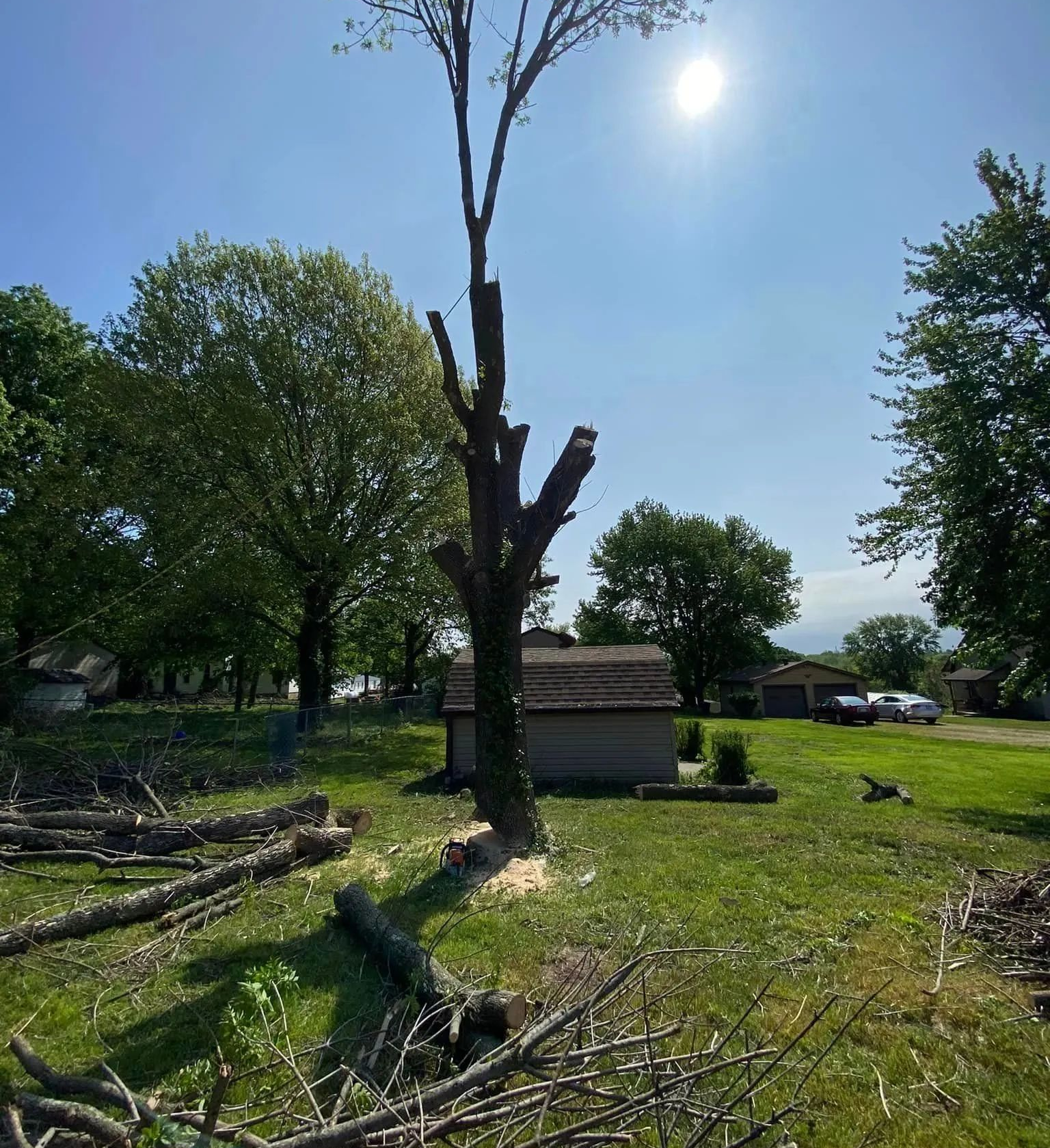
Tree Leaning to One Side After a Storm? How to Tell If It's About to Fall
Quick Answer: A tree that leans after a storm is dangerous when the lean is sudden and new, especially if the soil is heaving or cracking on one side, roots are lifting, or the trunk has a fresh crack. A gradual lean a tree has held for years is usually far less urgent. The clearest red flag is raised or split soil at the base, which means the root plate is failing. If you see that, keep people away and have an arborist assess it before the next storm.
The wind finally dies down, you step outside to check the yard, and one of your trees is not standing the way it used to. It is leaning, maybe just a little, maybe a lot, and now you are staring at it wondering whether it is going to come down on the house, the fence, or worse. It is one of the most unsettling things to find after a storm, and the hard part is that not every leaning tree is an emergency, while some are very much one.
Knowing the difference matters, because the wrong call goes both ways: panicking over a tree that has leaned safely for decades, or ignoring one that is quietly pivoting out of the ground. Storms are hard on trees across Missouri, where heavy summer winds and winter ice loads test root systems every year. Here is how to read what your leaning tree is actually telling you and when it is time to get people away from it.
A Sudden New Lean Is the First Red Flag
The single most important question is whether the lean is new.
Many trees grow at an angle their whole lives, leaning toward sunlight or away from crowding, and they are perfectly stable that way. Their roots have grown to balance that lean, and the trunk often shows a gentle curve as it corrected its growth upward over the years. A tree like that, unchanged after a storm, is usually not an emergency.
A lean that appeared or worsened during the storm is a different matter entirely. That means something just gave way: roots, soil, or the trunk itself. A tree that was vertical yesterday and is leaning today has lost some of what was holding it up, and it may keep moving. If you can tell the lean is brand new, treat it as serious until an expert says otherwise.
How to tell if the lean is new.
Look for fresh, light-colored cracks in the trunk, branches under tension you do not remember, and a canopy that now sits over an area it never used to. Old photos of your yard, or simply your memory of where the tree stood, are useful references here.
What the Base of the Tree Is Telling You
The most reliable danger signs are not up in the canopy. They are at ground level, around the root plate.
Heaving or raised soil
This is the warning sign that matters most. If the soil on one side of the trunk, usually the side opposite the lean, is bulging, mounded, or lifted, the root plate is rotating up out of the ground. That is a tree in the process of uprooting, and it is one of the clearest signals that failure may be close.
Cracks or splits in the soil
A crescent-shaped crack in the ground around the base, or soil that looks like it is pulling apart, means the roots are tearing and the anchor is failing. Stormwater pooling in those cracks makes it worse by softening the soil further.
Exposed or lifting roots
If roots that used to be underground are now visible or pulling up on the high side, the tree is pivoting on whatever roots remain. Saturated ground after heavy Missouri rain makes this far more likely, because wet soil grips roots much more weakly than dry soil.
A gap where the trunk meets the ground
Any new space opening up between the base of the trunk and the soil is a sign the tree is shifting.
If you see soil heaving, ground cracks, or lifting roots, the tree is not just leaning, it is failing at the root, and that is the situation most likely to end with the tree on the ground.
Warning: If the soil is heaving or cracked, roots are lifting, or the tree is leaning over a house, driveway, power line, or anywhere people gather, keep everyone well clear and do not park or walk under it. A tree failing at the roots can come down with little additional warning, especially when the ground is still saturated or the next storm arrives. This is the point to bring in a professional rather than wait and watch.
Trunk and Canopy Clues to Check
Beyond the base, the trunk and crown add to the picture, and several issues often appear together after a storm.
Cracks in the trunk
A vertical split, a fresh seam, or a crack running into a major fork is a structural failure in progress. Combined with a lean, it means the tree may break rather than tip.
Hangers and broken limbs
Branches that snapped but did not fall, lodged in the canopy, are a separate immediate hazard regardless of the lean, and they add unbalanced weight that can worsen a lean.
A one-sided or unbalanced canopy
If most of the foliage and weight sit on the leaning side, gravity is working against the tree every minute, and wind on that side has more to grab.
Signs of pre-existing weakness
Storms tend to take the trees that were already compromised. Mushrooms or fungal growth at the base, hollow or soft spots, dead sections, and the kind of decline that follows emerald ash borer in ash trees all weaken the wood and roots that a storm then exposes. A tree showing decay plus a new lean is a higher-risk combination.
Why Saturated Ground Changes Everything
It is worth understanding why so many trees lean or fall in the hours and days after a storm rather than during it.
Healthy roots anchor a tree by gripping firm soil. When heavy rain saturates the ground, that soil turns soft and loses much of its hold, so the same root system that stood firm in dry conditions can let the tree pivot under wind load or even its own weight. This is why a tree can look fine during the storm and then lean further, or come down entirely, a day later as the wet soil keeps giving way. It is also why a leaning tree in saturated ground should be treated as more urgent than the same lean in dry conditions: the situation can worsen on its own, without any more wind.
Tip: Take clear photos of the leaning tree from a few angles as soon as it is safe, including a close-up of the soil at the base. If you are not sure whether the lean is new, those images give an arborist a reference and help track whether the tree is still moving over the following days. A lean that visibly increases between photos is a tree that is actively failing.
What to Do, and What Not to Do
When you find a leaning tree after a storm, a few clear steps keep everyone safe.
Keep your distance and clear the area. Move cars, keep kids and pets away, and avoid the side the tree is leaning toward. Do not go underneath it to inspect the canopy.
Never touch a tree near power lines. If the tree is leaning into or near any electrical line, stay far back and treat the line as live. This is not a do-it-yourself situation under any circumstances.
Do not try to push, prop, or cut it yourself. A tree under tension stores tremendous force. Cutting a leaning, loaded tree without training and the right equipment is how serious injuries happen, because the trunk and limbs can snap back or the whole tree can drop unpredictably.
Get a professional assessment. A trained arborist can evaluate the root plate, the trunk, and the lean, and tell you whether the tree can be saved, cabled, and monitored, or needs to come down. They have the rigging and experience to remove a compromised tree safely, in a controlled way, before it falls on its own terms.
The goal is not to guess. It is to recognize the warning signs early, get people out of the fall zone, and let someone with the right training make the call and do the work safely.
Frequently Asked Questions
Is a leaning tree always dangerous?
No. A tree that has leaned the same way for years, with roots and trunk grown to balance it, is often stable. The dangerous leans are the new ones, especially when paired with heaving soil, ground cracks, or lifting roots. The change after a storm is what signals risk, more than the lean itself.
What's the most important sign that a leaning tree might fall?
Raised or heaving soil on one side of the base, usually opposite the lean. That means the root plate is rotating out of the ground and the tree is actively uprooting. Combined with soil cracks or exposed roots, it's the strongest signal that failure could be close.
Why would a tree fall a day or two after the storm passed?
Saturated ground. Heavy rain softens the soil and weakens the roots' grip, so a tree can keep pivoting after the wind stops. As the wet soil continues to give way, a tree that merely leaned during the storm can come down with no additional wind.
Can a leaning tree be saved, or does it have to come down?
It depends on the cause and severity. A minor lean with a sound root plate can sometimes be monitored or supported with cabling. A tree with a failing root system, a cracked trunk, or a heavy new lean usually needs removal. An arborist's assessment is what determines which path fits.
Is it safe to straighten a leaning tree myself?
For an established tree, no. Trying to push, prop, or winch a leaning tree, or cutting one that's under tension, is dangerous and often makes things worse. Small newly planted trees can sometimes be re-staked, but a mature leaning tree is a job for professionals with the right equipment.
How soon should I have a leaning tree looked at after a storm?
Promptly, especially if the lean is new or you see any soil heaving, cracking, or root lifting. Those signs mean the tree may keep moving, and the next storm or continued wet ground can finish the job. Getting an assessment before that happens is the safer choice.
Reading the Lean Before It's Too Late
A leaning tree after a storm sits right on the line between harmless and hazardous, and the difference usually shows at the base. A lean the tree has carried for years is one thing; a fresh lean with heaving soil, cracking ground, or lifting roots is a tree telling you its anchor is failing. When you see those signs, the smart move is not to watch and hope but to clear the area and bring in someone who can read the whole tree and act safely
Get a leaning tree assessed before the next storm — A new lean with disturbed soil or lifting roots means the tree may already be failing, and saturated Missouri ground can bring it down without more wind. At We Care
Tree Care, we bring a decade of experience assessing and managing hazardous trees throughout Richmond and Independence, Missouri. We evaluate the root plate, trunk, and canopy to determine whether your tree can be supported and monitored or requires controlled removal, then handle the work safely with the right rigging. Reach out for a
tree risk assessment and get peace of mind before the weather tests it again.